Are you a builder, a creator, a connector, or a seeker?
We all have these drives within us, but for each of us, one or two often take the lead. Vedic astrology (Jyotisha) has a beautiful framework for understanding these core human motivations. It’s called the Purusharthas, or the Four Aims of a Meaningful Life.
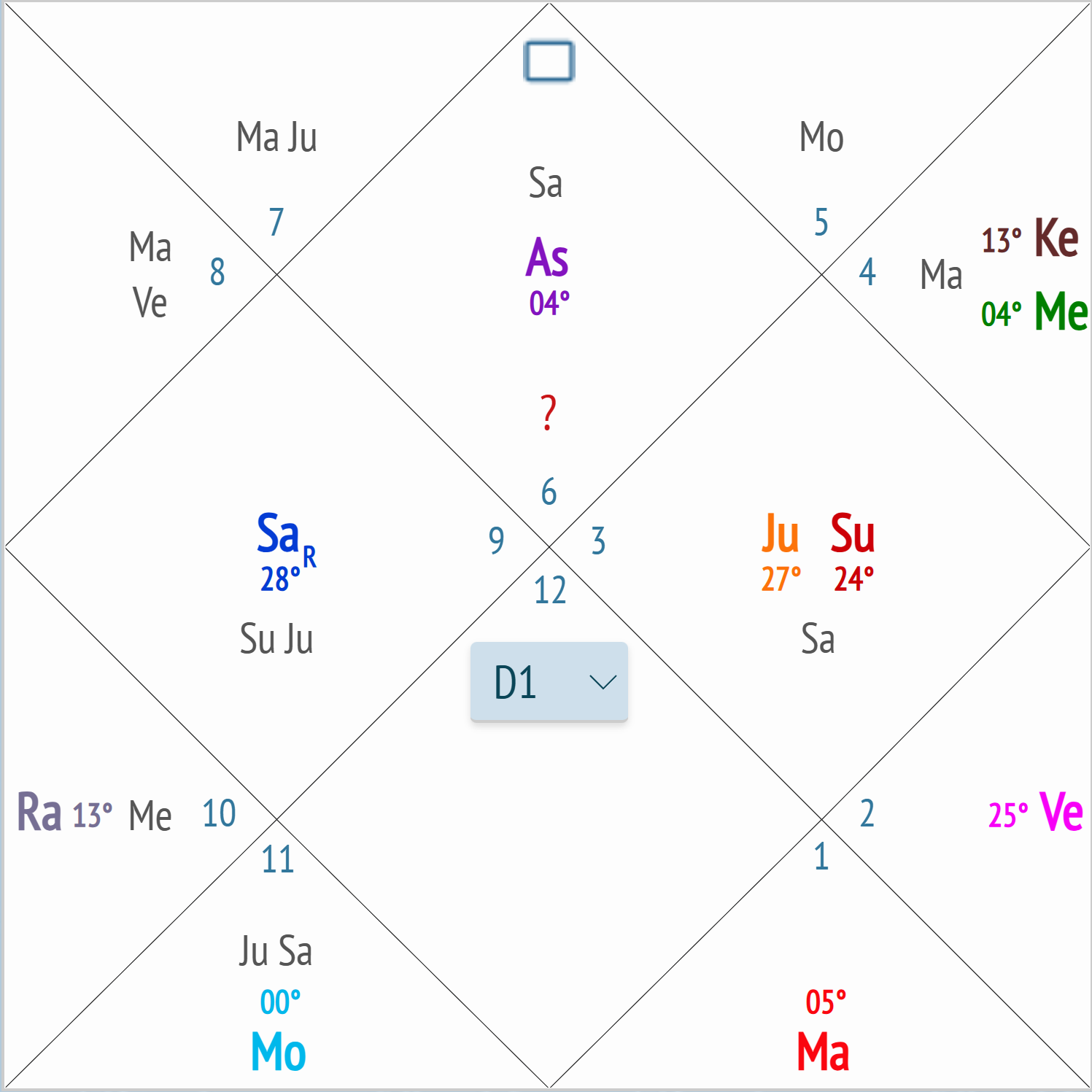
Your birth chart isn’t just a snapshot of the sky; it’s a personal map of these four aims. It shows which drives are most natural for you, when they are likely to be activated, and how you can live a more balanced, fulfilling life by honoring them.
Let’s explore these four aims and how you can spot them in your own chart.
The Four Departments of a Meaningful Life
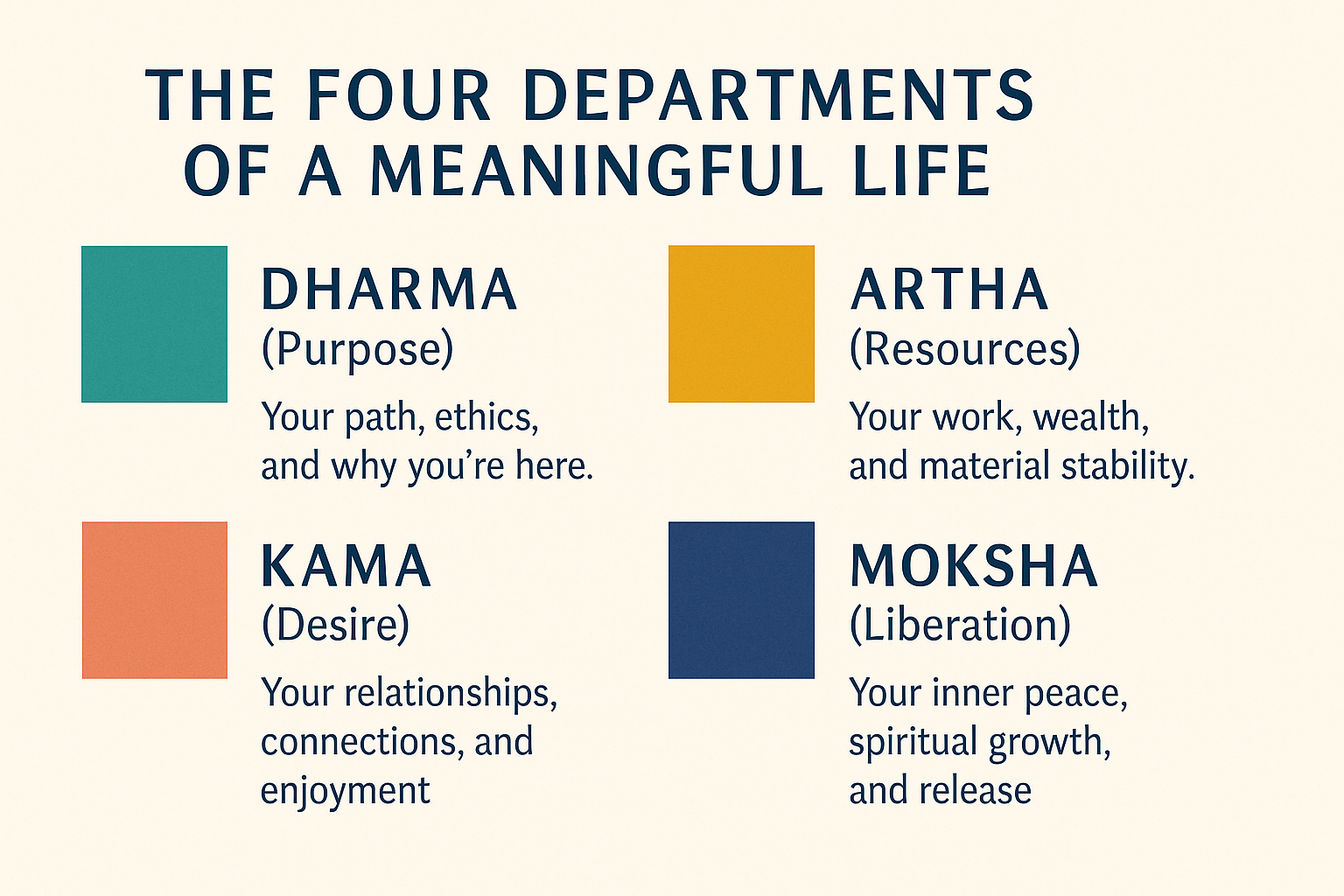
Think of these as the four essential departments of a complete human experience. All are necessary, but your chart will show where your energy is most concentrated.
- Dharma (Purpose): Your path, ethics, and why you’re here.
- Artha (Resources): Your work, wealth, and material stability.
- Kama (Desire): Your relationships, connections, and enjoyment.
- Moksha (Liberation): Your inner peace, spiritual growth, and release.
Each of these aims is connected to a group of three houses in your chart.
The Dharma Houses (1, 5, 9): Your Path & Purpose
The core question: “Why am I here?”
The Dharma houses are the pillars of your identity and personal mission. They represent your unique path, your creative intelligence, and the wisdom you gather along the way.
- 1st House: Your core self, your body, and your approach to life.
- 5th House: Your creativity, joy, intelligence, and legacy.
- 9th House: Your beliefs, teachers, higher wisdom, and sense of meaning.
When this area is strong in your chart, you are likely driven by a powerful sense of purpose. You thrive when you are learning, creating, teaching, and living in alignment with your personal truth.
The Artha Houses (2, 6, 10): Your Work & Stability
The core question: “How do I sustain myself and contribute?”
The Artha houses are about the practical, material side of life. They govern your resources, your work, your health, and the skills you use to build a stable and secure existence.
- 2nd House: Your wealth, values, speech, and what you consume.
- 6th House: Your daily work, service, health routines, and problem-solving skills.
- 10th House: Your career, reputation, and actions in the world.
When this area is strong, you are a builder. You find fulfillment in meaningful work, providing for yourself and others, and creating tangible results in the world.
The Kama Houses (3, 7, 11): Your Desires & Connections
The core question: “What do I want, and who do I want to share it with?”
The Kama houses are about your desires, ambitions, and relationships. This is the social and relational sphere of life, where you connect with others to achieve shared goals and find enjoyment.
- 3rd House: Your courage, curiosity, personal initiative, and skills.
- 7th House: Your romantic partnerships, business contracts, and one-on-one relationships.
- 11th House: Your friendships, networks, community, and long-term aspirations.
When this area is strong, you are a connector. You come alive through collaboration, social interaction, and pursuing your ambitions with the help of your allies.
The Moksha Houses (4, 8, 12): Your Inner Freedom
The core question: “What will set me free?”
The Moksha houses represent the inner, psychological, and spiritual dimensions of life. This is where you heal, transform, and find true contentment by letting go of attachments and understanding your deeper self.
- 4th House: Your emotional foundation, home, mother, and inner peace.
- 8th House: Your deepest transformations, healing, psychology, and hidden knowledge.
- 12th House: Your spiritual practices, retreat, dreams, and final liberation.
When this area is strong, you are a seeker. Your path is internal, focused on emotional maturity, healing, and connecting with a reality beyond the material world.
A Quick Note on “Karma”
You might be wondering where “karma” fits in. Karma means action, and it runs through your entire chart. Every choice you make in every house is a karma. The 10th House has a special title, the Karma Bhava, because it represents your most visible actions in the world—your career and public life.
How to Read This in Your Chart: A Simple 3-Step Process
- Find Your Focus: Look at your chart and do a quick count. Which group of houses (Dharma, Artha, Kama, or Moksha) holds the most planets? This reveals your natural, lifelong emphasis.
- Look at the Timing: Your focus isn’t static. In Vedic astrology, Dashas are planetary periods that act like “life chapters.” When the Dasha of a planet connected to your Artha houses begins, your career and finances will naturally take center stage.
- Aim for Balance, Not Perfection: The goal isn’t to be 100% focused on all four aims at once. It’s about recognizing which “department” needs your attention now and honoring it, without completely neglecting the others.
Your 5-Minute Chart Check-In
Ready to try it? Grab your chart.
- Circle the planets in your Dharma houses (1, 5, 9).
- Box the planets in your Artha houses (2, 6, 10).
- Underline the planets in your Kama houses (3, 7, 11).
- Star the planets in your Moksha houses (4, 8, 12).
Which group stands out the most? What does that tell you about your core nature?
Now, pick one micro-action you can take today to honor each aim:
- Dharma: Read an inspiring article or share something you know.
- Artha: Complete one practical task on your to-do list.
- Kama: Send a thoughtful message to a friend or collaborator.
- Moksha: Spend 5 minutes journaling or sitting in silence.
Final Thought: Your Chart is a Map of Priorities
Your birth chart doesn’t lock you into a single destiny—it gives you a map of your soul’s priorities. By understanding whether you’re in a season of Dharma, Artha, Kama, or Moksha, you can stop fighting the cosmic current and start flowing with it.
When you align your daily actions with the deeper themes of your life, you find more meaning, less resistance, and a powerful sense of coming home to yourself.